AI Coding

In 2016 I worked on Description2Code for OpenAI's Requests for Research; in 2017 I built Hopper. Since then: coding-agent infrastructure, research reproduction at catalog scale, and agents for mathematics. Every coding agent trend is a shadow of a program synthesis primitive.

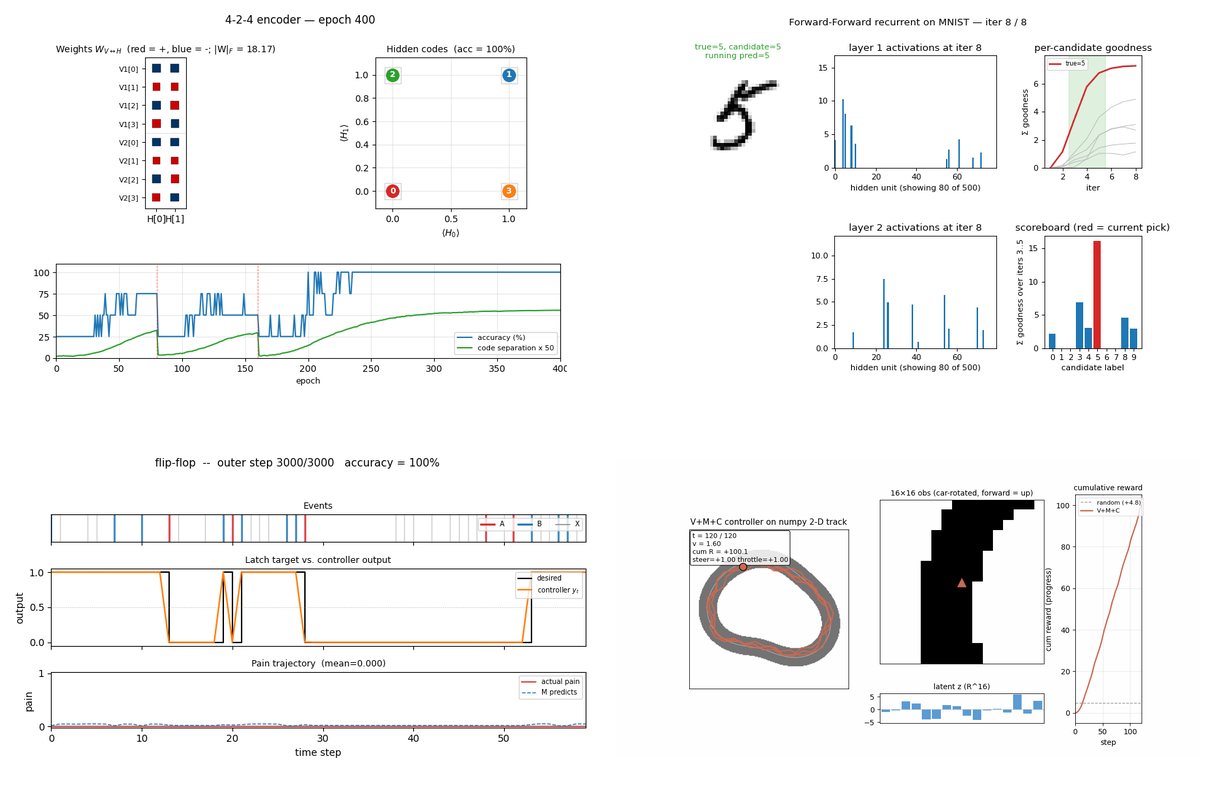
Four training figures from the catalogs, the 4-2-4 encoder, Forward-Forward on MNIST, the flip-flop task and a world-models car on a track

Hinton Problems and Schmidhuber Problems

2026 · with Yaroslav Bulatov and the Sutro Group

Yaroslav Bulatov’s Sutro Group, a study group on energy-efficient AI training that meets at South Park Commons, wanted a baseline catalog of the small learning problems in Geoffrey Hinton’s papers. I built SutroYaro, the group’s agent workspace, wrote the SPEC as a GitHub issue and ran the build as waves of Claude Code agents sending pull requests: 53 of Hinton’s experiments from 1981 to 2022 in one 49-hour run, in pure NumPy, each problem with its own README, a GIF of the learning dynamics and a comparison against the paper. A week later the same workflow did 58 of Jürgen Schmidhuber’s papers from 1989 to 2025, 1.13 billion tokens and $3,879 summed from the session logs. The Schmidhuber catalog has 210 stars.
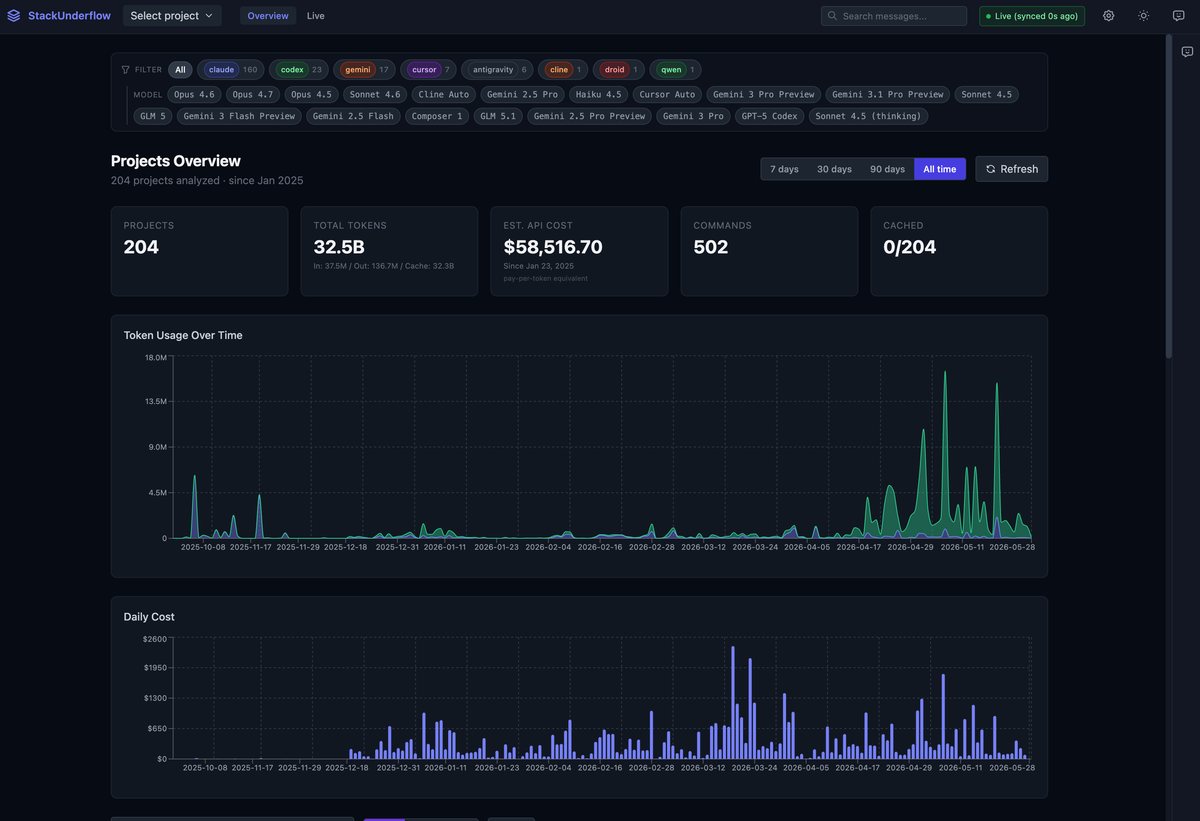
The staxtrace overview, 204 projects indexed, 32.5 billion tokens, token usage and daily cost over time

staxtrace

2026

Offline, local-first observability and memory for AI coding agents. It ingests the session logs that 20 coding-agent providers already write (Claude Code, Codex, Cursor, Cline and the rest) into one SQLite store and builds on top of it: cost analytics, time-travel playback that reconstructs the filesystem at any step, and a memory layer the agents themselves query mid-task. I built it because the cost of the Schmidhuber run took real work to get; now it is a number. The agents working on this site use it to check what earlier sessions did.

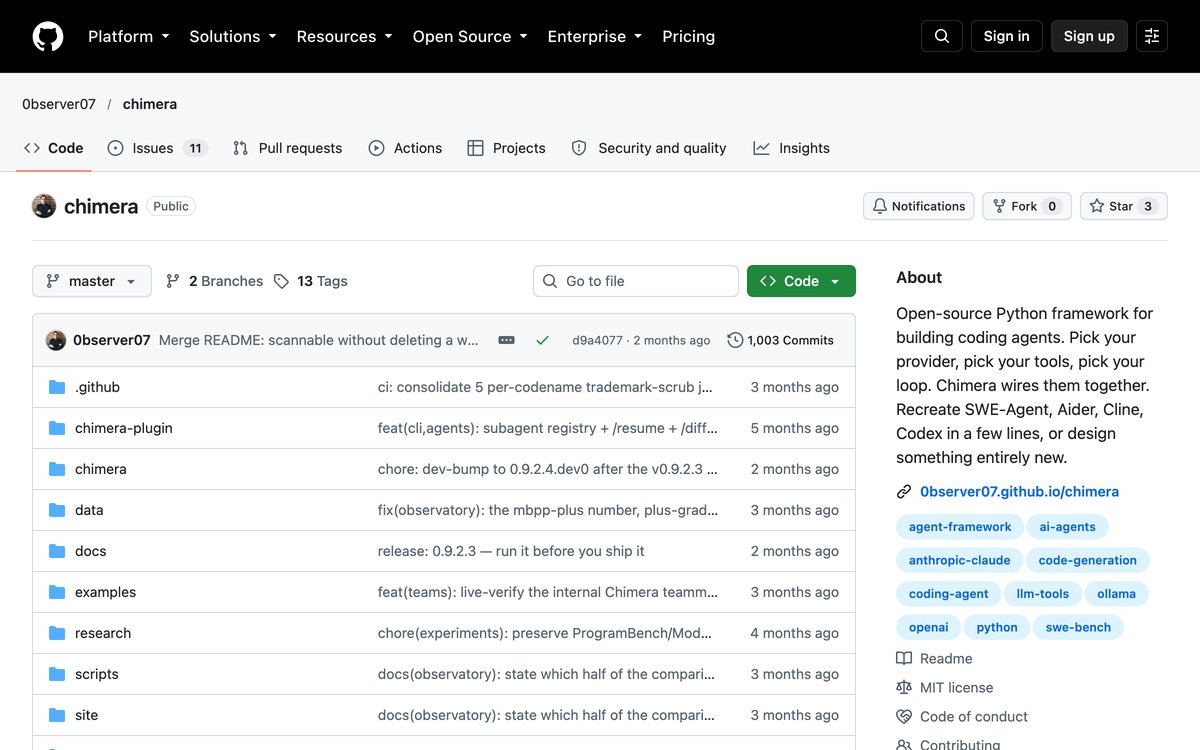
The Chimera repository on GitHub, an open-source Python framework for building coding agents

Chimera, Novalis and the software factory

2026

Every agent I built turned out to be the same agent with different tools, so I wrote that down as a framework. Chimera is a coding-agent framework built by coding agents from my specs: about 144,000 lines of Python, 3,600 tests, 47 tools, 8 reasoning loops, 7 LLM providers, with presets that reproduce SWE-Agent and Aider. Novalis is an AI-native terminal designed to be rewritten by the coding agents running inside it, in private pre-release. With staxtrace watching all of it run, that is the software factory: I write the spec in the morning, hand it to the agents, and review the next day.

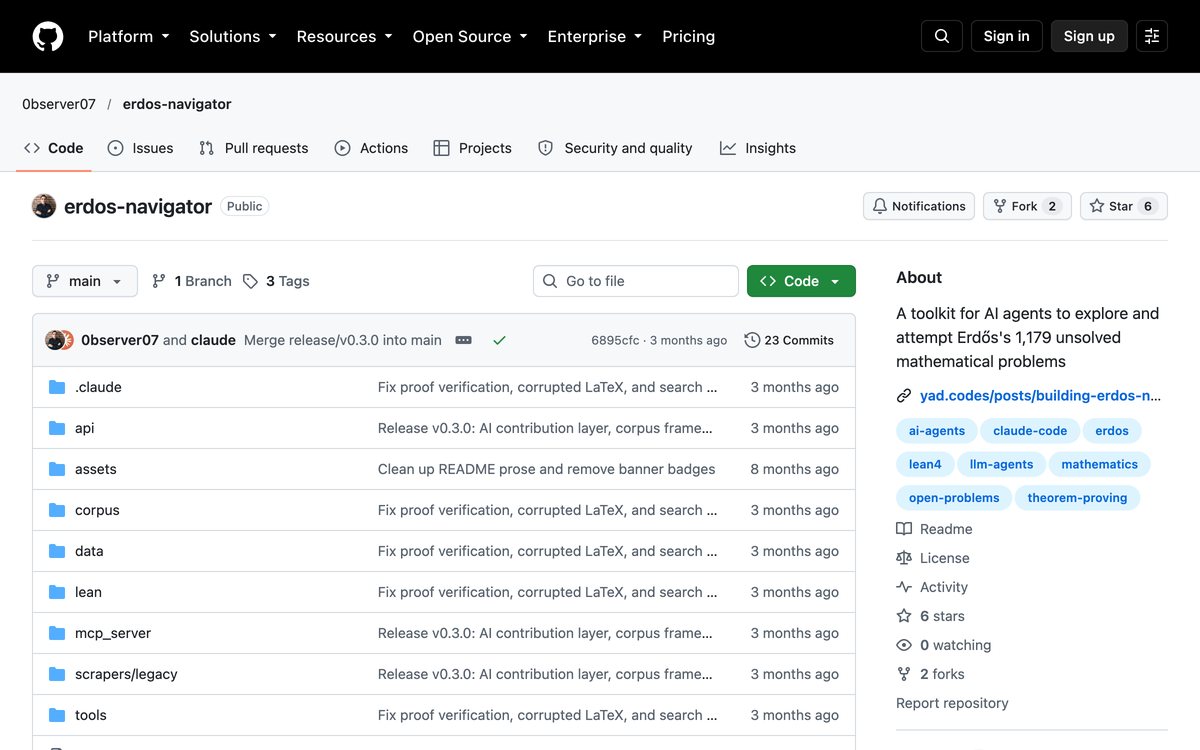
The Erdős Navigator repository on GitHub, a toolkit for AI agents on Erdős's problems

Erdős Navigator and Bourbaki

2026

If you care about synthesis you end up caring about verification, and verification takes you to formal logic, type theory, homotopy type theory, algebraic topology. I got deep. Too deep. The way back out was the LLM-plus-solver pattern: the model proposes and decomposes, Lean and Z3 check. Erdős Navigator turns Claude Code into an assistant on Paul Erdős’s problems, 1,217 of them in a database with a REST API and skills for exploring them, built after AI started solving Erdős problems in late 2025. Bourbaki is an agent for mathematical reasoning and proof with SymPy, Lean 4, OEIS and arXiv.

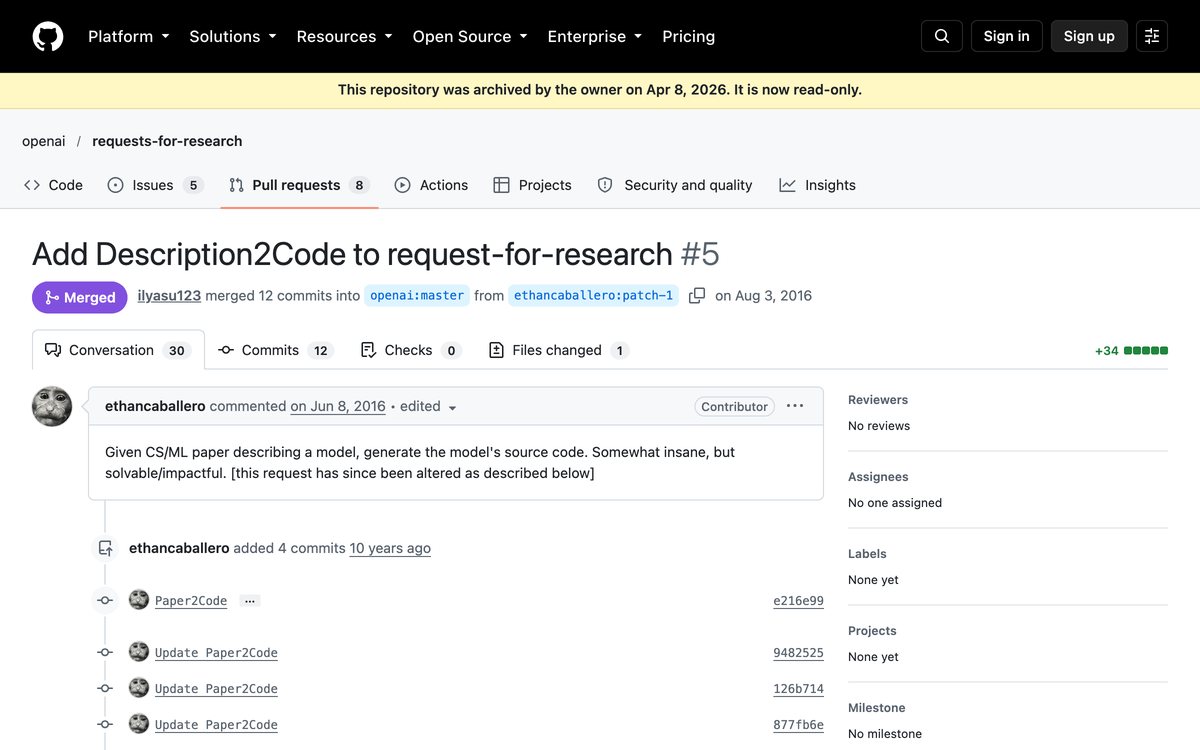
The pull request that added Description2Code to OpenAI's Requests for Research, merged by Ilya Sutskever on August 3, 2016

Description2Code and Neural Engineers

2016 to 2017 · with Ethan Caballero, Andy Zhang and Alex Skidanov

OpenAI’s first Requests for Research asked for a model that writes a program from a problem description. With Ethan Caballero, Andy Zhang and Alex Skidanov I worked on it in 2016: the Description2Code dataset, around 7,700 programming problems with solutions and test cases scraped from CodeChef, Codeforces and HackerEarth (the HackerEarth scrapers are mine), and Neural Engineers, a sequence-to-sequence model with an AST decoder, trained with supervised learning and then reinforcement learning. Ilya Sutskever merged the dataset into openai/requests-for-research in August 2016; it has a DOI on Zenodo. The model’s results were underwhelming, and the README says so.

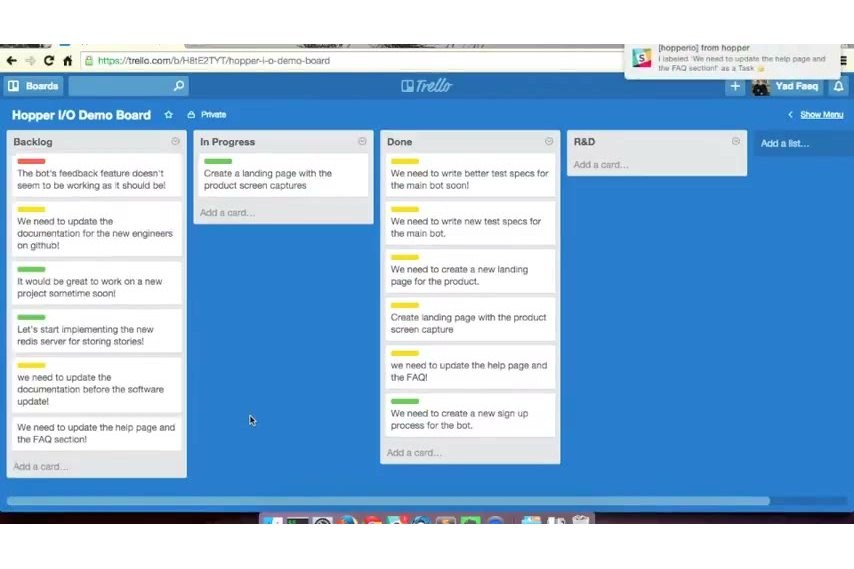
Hopper's 2017 demo: a Trello board, and the Slack notification where Hopper labels the new card as a task

Hopper

2017

A software engineering assistant I built in 2017, before GPT, before Copilot: a duplicate-issue detector, an issue labeler (bug, feature or chore), a commit-message generator that reads the diff, and a standup summarizer, on sequence-to-sequence models with attention, because that was what 2017 had. Two demos survive on YouTube. The problems I was solving in 2017 are the same ones Claude Code and Copilot solve today.

Also

Want to work together? Work With Me